6.12.19

Beauty and the Beast

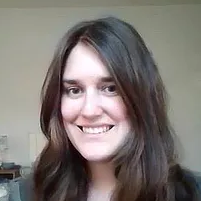
 A guest post by Katherine Macdonald


I have always loved the story of “Beauty and the Beast”. It was an obsession that began in childhood, when even a six-year-old me knew that there was something different about this fairy story, first shown to me through Disney’s marvellous 1991 adaptation. It wasn’t until I was a little older I could explain it, though. I loved that the heroine didn’t form an immediate attachment on the hero of the tale. I loved that you could see them falling in love, slowly and then all at once.
“Beauty and the Beast” has its origins in the story of Cupid and Psyche, but the title comes from a 1740 French novella, La Belle a la Bete, by Gabrielle-Suzanne Barbot de Villeneuve. It is one of the few classical fairy tales penned by a woman and its moral is supposedly not only about not judging by appearances, but also being patient and not afraid of change. Its primary audience was young girls, many of whom would be facing arranged marriages. De Villeneuve wanted to spread a message that their husbands need not be monsters and they should not be afraid of marriage.
This message is a little outdated, but the elements of love, fear and patience are still predominant within my retelling. Our heroine is shown not as afraid of marriage, but of afraid of falling in love. She watched her father be torn to pieces by the death of her mother many years ago, and has quietly resolved never to let herself be that dependant on another person. The Beast, of course, needs her to love him to break the curse, and therein lies the bulk of the conflict within the tale.
While the 1991 Disney adaptation is spectacular, it deviates greatly from its source material, which I was keen to return to. I wanted a classical setting, a truly enchanting, fairy-tale castle, but I twisted it slightly in making the castle completely abandoned and devoid of any life when our heroine first appears. As her heart softens towards the Beast, the castle slowly blossoms into a palace reminiscent of the sumptuous palace depicted in de Villeneuve’s original version.
I also made significant changes to our heroine, previous epitomised by her beauty and goodness. This “beauty” is only moderately pretty, has a fiery temper, and isn’t even particularly kind- at least, not to begin with. The Beast, by contrast, is unfailingly patient and kind (like the original) and he is not the first one to undergo a transformation. Both characters also receive new names. It always bothered me that the Beast was never given one, as it seemed to me that placed their relationship already on shaking, uneven footing. I called Beauty “Rose” instead, after the gift that brought them together in the classical stories, and the Beast “Thorn”- a name that she gives him as she feels uncomfortable with the premise of calling him Beast. It is after this moment that the love story between them finally begins to take root. They are equals.

There are two “problematic” issues with almost every adaptation I’ve ever read that I was keen to avoid. Firstly, that it is the Beast that imprisons her. This issue is done away with in the first chapter, when Rose becomes trapped not my him, but the magic that surrounds his castle. Again, this was done to foster an innate inequality between the two of them, and to highlight the Beast’s goodness. He is as much a prisoner as she is. It also alleviates any possible argument of Stockholm syndrome with has often been critics first comment regarding this tale.
The second issue I’ve always found problematic is the Beast’s courting of Beauty. In the old version, he asks her to marry him every night, which by modern hands is harassment. I also found it hard to accept how quickly –or perhaps suddenly- her feelings towards him shifted. This romance is very much a slow burner, and the audience is aware she has fallen for him before she comes to that realisation herself. Reviewers have mentioned how believable they find the love story, how it perfectly encapsulates two people falling in love.

I was also heavily inspired by Gothic fiction, and the works of Angela Carter. There is a direct allusion to The Bloody Chamber in an early joke told by the Beast. These inspirations worked their way into the descriptions of the castle and grounds, but also created a villain; a dark fairy trapped within the walls of the castle, a true antagonist for our heroine to fight against. De Villeneuve’s version alludes to her –the person that cursed the prince in the first place- but she never materialises on page. This addition to the tale allows for plenty of action and mystery in a story that is otherwise very slow-paced. 

My aim when writing this adaptation was to provide the retelling I’d always wanted to read. A captivating, mesmerising rewrite than encapsulated a beautiful fairy-tale setting but left behind outdated concepts. A story that felt classical at its roots, but modern in its approach. I wanted a timeless tale that made people believe in true love, and I really hope I’ve accomplished this.


About the Author 
Born in Redditch, England, to a solicitor and an ex-military man, one of Katherine "Kate" Macdonald's earliest memories was of watching her parents disappear behind the pages of a book and wanting to follow them. For her, books were little pocket dimensions that could be carried about, and the safest way to have a very real adventure.

Rather than rebel during her teenage years, she spent most of them locked up in her room, furiously writing down the hundreds of stories filling her head. Her little sister Kirsty served as her primary audience, and first fan. Without her, she would never have continued to write.

After completing a BA in English and Creative Writing at Lancaster University, she moved to Exeter to train as an English teacher, and then to Kent to start her career. There she met her future husband, adopted two cats, and had a baby boy. It was only after surviving a year of parenthood and a full-time job on less than six hours a night that she finally gained the courage to publish her debut novel, "The Rose and the Thorn." It's a retelling of Beauty and the Beast inspired by a dream of a girl surrounded by snow in a field of flowers.

At her heart, Macdonald is storyteller, and it is her dream to inspire others in the way that she has been inspired.

30.11.19

O Negative

books2read.com/O-Negative

Let me interrupt your day to talk about the insanity that is Irish mythology
What am I talking about?
  • O Negative is a novella
  • It's about a leannan sídhe and a human on the road trip from hell.
  • There is a romance subplot, because I like writing romance subplots.
  • It's not cute though, sorry.
  • There is a lot of gore, like a lot of it.

Ireland

So, you might ask yourself where in Ireland the characters go. It all starts in Belfast. From there on it go to Tiobraid Árann (Tipperary) on a slightly longer route. Paddy and Tess drive all of it in a pretty old car.

It's indeed a long way to Tipperary.

Vampires? Kind of...

The Leanhaun Shee (fairy mistress) seeks the love of mortals. If they refuse, she must be their slave; if they consent, they are hers, and can only escape by finding another to take their place. The fairy lives on their life, and they waste away. Death is no escape from her. She is the Gaelic muse, for she gives inspiration to those she persecutes. The Gaelic poets die young, for she is restless, and will not let them remain long on earth—this malignant phantom. 

W. B. Yeats in "Fairy and Folk Tales of the Irish Peasantry"

Leannan sídhe are essentially the vampiric muses of Irish mythology. They require blood to live and they acquire the blood by binding a mortal into a contract. The leannan sídhe will then exchange inspiration for the blood of the person who signed their contract. 


The Music

I made a playlist. Of course I made a playlist. There's even some Paganini, because Paddy likes to play the violin.


Get the book


Three fae and a mortal

O Negative, a novella set during the Nightmares of History series is  a novella set in Ireland that follows Paddy Kelly and Tess Le Fanu on their road trip through hell. Here's a sneak peak at the characters.

Two main characters

O Negative is a novella, so you don't have to deal with my usual too many POVs. All of it is from the perspective of Paddy Kelly.

Paddy Kelly 

Patrick Kelly was born in Belfast and drafted into the second world war at a far too young age. He and his sister Georgianna who is a nurse just about made it through the war. Back in Belfast, Paddy lifts bricks all day and it's killing him a bit inside. Paddy just wants to play violin which is why he accidentally summons the leanan sídhe Tess and they embark on a journey. Paddy hates journeys.


Tess Le Fanu

Tess is a leannan sídhe which means she needs blood to survive. During her years on earth, Tess never really learned to have her own interests. It was always about what the people whose blood she drank wanted. Tess is O Negative and can therefore only drink O Negative blood.


A couple of Villains

Arabella Bennett

Arabella never really wanted to be a leannan sídhe. Raised by Tess and a demigod, Arabella was spoiled rotten when she was little. She was raised as if she owned the world, so now she believes that she should. Arabella is AB+, so she could drink all blood, but she prefers O Negative.


Laoghaire

 Laoghaire has never been Tess' favourite leannan sídhe. Whereas most leannan sídhe have a grace about them, Laoghaire takes a more direct route to getting people to sign her contract.


O Negative Tag | Intro PostSpotify Playlist | Pinterest Board | Character Sneak Peak
books2read.com/O-Negative

https://facebook.com/quantumlandbookhttps://instagram.com/quantumlandbookhttps://twitter.com/quantumlandbookhttps://pinterest.com/quantumlandbook
https://lb.benchmarkemail.com//listbuilder/signupnew?4rby2IB8yTGTdSsipXhHyP5pwVnAjsSI1oQ8MGmqDIPtO5iNRn8gS049TyW7spdJ


16.11.19

Hi, I'm Alice


Hello there,

I'm Alice de Sampaio and I write Gothic Horror. Ravens and books is a blog about my books and about what I read. At the moment, I am based in Antwerp, Belgium which is something you will definitely notice in my writing.


My main series is called Nightmares of History and based around mythological characters through the ages. It's the gods and creatures of ancient myths navigating time on their way to an inevitable Ragnarøkkr. If you want a slightly less fancy description, you could say it's a mythology crossover. One thing I do for the series is writing a lot of spin-offs centred around the vampiric characters in the series which include classical vampires and Leanhaun Shee which are vampiric muses from Irish Mythology. Nightmares of History started with the spin off novella O Negative.

O Negative

  Belfast, 1946
Paddy and Tess are on the road trip from hell. 

After the war, all Paddy wanted was playing music. Now, he can't even pick up his violin. His muse comes in the form of the mysterious Tess who trades inspiration for his precious blood. Together, they go on a journey to the caves of Cruachan and beyond, the others always on their trail. 

Will Tess be able to keep Paddy from the horror and betrayal her world holds?
For NaNoWriMo 2019, I'm working on Winged Pain which is the chronological start to Nightmares of History. It features Loki, Thanatos, and Thalia experiencing the battle of Troy while Loki tries to kick off Ragnarøkkr.

Winged Pain


The battle of Troy is raging. Thalia been watching and now a new player appeared. Loki has caused mayhem on the battlefield and Thanatos is hellbent on stopping him.


 Follow

facebook.com/ravensandbooksinstagram.com/ravensandbookstwitter.com/ravensandbookshttps://www.pinterest.de/AlicedeSampaioKalkuhl/

Join the Readers List


On Indie Publishing with A.F. Stewart

When it comes to indie publishing there are many mysteries for authors. Over the next weeks, I will be writing posts about indie publishing....